
A city is not just its monuments. It also appears on a street crossed too quickly, in a building that is followed without looking at it, in a sports field set in the middle of the houses. Urban photography consists of observing these built spaces and how they are inhabited, traversed and transformed by daily life. It can show a lively street, but also a facade, a plot or a detail of architecture. This is where this look is interested: in the relationship between places, their uses and the details that one notices taking time.
In Glasgow and Bayonne, I photograph very different elements. A facade, a museum, a pediment, a rugby field or a truck in front of a theatre. Ended, these subjects make up less of an inventory than a way to travel the city. They show what lives in the same space: architecture, travel, leisure and the traces of everyday life.
In this article, I leave some images of my portfolios to talk about this look. No recipe for a street photo or a list of places to visit. Rather than a simple question: what keeps your eye off when you take the time to look at a city?

What is urban photography?
Urban photography observes the spaces of the city, their forms, their uses and the scenes that unfold there. It may include passers-by, but also a sports field, facade, inscription or architectural detail. It is not limited to monuments or lively street scenes. For me, it starts when an ordinary place reveals something of the way the city is lived.
Urban photography: getting out of the postcard decor
Urban photography is often associated with famous views: a square, a monument, a recognizable horizon line. These images have their place. But they don't say everything about a city. A city also understands itself at sidewalk height, in spaces that serve something, in transitions between two neighborhoods, in places that are not designed to be photographed.
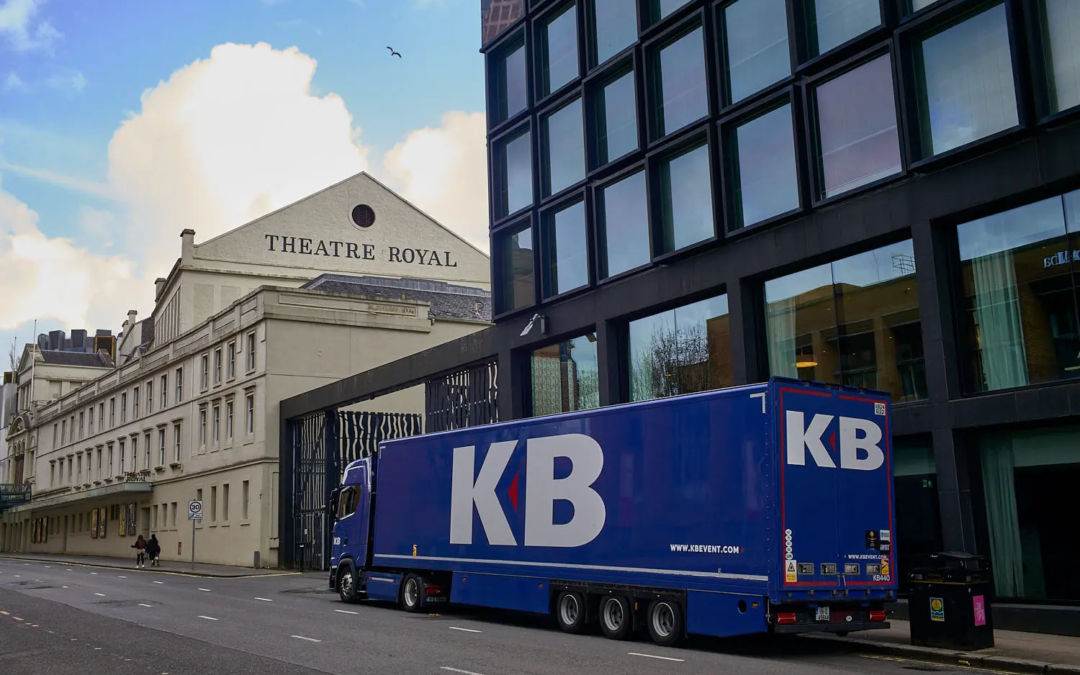
In Glasgow, an image of my portfolio shows a large semi-trailer parked in front of the Royal Theatre. The building remains visible, but the truck occupies a large part of the stage. This neighborhood changes the reading of the image. We're not just looking at the architecture of the theatre. We also see an active street, deliveries, a vehicle that takes its place in the urban landscape.
I like this kind of encounter because it resists the image too clean. The city is not an empty setting in front of the lens. It is used to travel, work, meet, live. A vehicle at a stop, a construction site, a front or a contemporary façade can tell this life as surely as a monument.
Urban photography therefore often begins with a shift of sight. Instead of looking only « the beautiful viewpoint », we observe what is already there. How the volumes respond. Which cuts the facade. Which attracts the eye to the foreground. Which seems banal until we get him closer to another element.
Read a city through its uses
A place takes on a different meaning when you look at what people do there. In Bayonne, my portfolio shows a rugby field in the city centre and a Basque pediment in the Petit Bayonne. These spaces remind that the city is not only built around its streets and buildings. It is also built around shared practices.
The rugby field is a simple picture. White lines, a green surface, goals. But its presence in the middle of the city raises a question: how does this sports space fit into its environment? The pediment poses another relationship. The wall is not only an architectural element. It becomes a place of play, a space that has a precise function and a history of use.

These images allow me to look at the city differently than by following a list of monuments. It is on the places that the inhabitants know, but that the visitor may not notice. They give another scale to the landscape. They connect a building to a use, a neighborhood to a habit, a photograph to the real life of the place.
The daily life is not limited to those visible in the frame. It can be suggested by an open door, maintained grounds, bus stop, street posters or worn furniture. These signs may be discreet. But they indicate how space is lived, not just how it was drawn.
Unexpected details also paint a portrait of a city
In my portfolio on Glasgow, there's a tree bearing big fruits whose name I don't know. This detail has something a little strange. It slices with the idea of a city made solely of stone, glass and circulation. The image invites you to stop on a living element, without having to turn it into a complicated symbol.
I find this same place of detail in the views of the Riverside Museum, the banks of the Clyde or a pedestrian bridge over the M8. These topics are not interchangeable. The museum involves a singular architecture. The river opens up another perspective. The bridge and highway tell traffic and separations. Together, they give several entrances to a single city.
When I photograph a place, a small detail can count as much as the main subject. A silhouette in the distance gives a ladder to a building. A poster reveals the passage of time. A tree makes a facade less abstract. It is not a question of accumulating elements in the framework, but of identifying those that change the relationship between forms.
This attention sometimes requires slowing down. The first view is not always enough. One can move a few steps, wait for traffic to come out or just look at how light falls on surfaces. The result does not depend on a spectacular event. It often depends on the encounter between a place and a specific moment.

Architecture and daily life in the same context
The buildings attract an eye, but they do not tell the city alone. In Glasgow, views of the Riverside Museum show its volumes and zinc coating. Elsewhere in the portfolio, the street around the Theatre Royal combines a theatre with more recent constructions. Urban photography can hold these temporalities together, without trying to smooth them out.
In Bayonne, the subjects range from the station and its belfry to the buildings along the Adour, to the cinema L-Atalante and ordinary life scenes. This mixture is important. Photographing one monument after another would give an inventory. Alternating known places, ordinary facades and meeting spaces gives the visual walk more rhythm.
A good urban image does not need to explain an entire city. It can simply propose a relationship between two things: old and recent, public and private, nature and concrete, place of passage and place of stay. The viewer then completes what he sees with his own memories and his experience of cities.
Lines and materials also matter. A grid can guide the look. A glass façade can reflect what is in front. A wall can close the image or, on the contrary, make you want to look back. It is not necessary to know the name of each architectural current to feel that a building responds differently to its environment. For another look at the painted walls and their place in the street, I also tell my choices in this article dedicated to the photo street art in Glasgow and Bessèges.
Photographing the street without making the scene
The street changes every minute. People pass, vehicles stop, signs turn on, weather changes colors. For my part, the images of the city I share come from places actually photographed and from what was there. These are not recomposed scenes from invented elements.
This approach does not mean that the aircraft records the city in a neutral way. The choice of point of view, frame and instant always guides the image. There is a difference between choosing nothing and choosing a place for what is happening. A street photograph keeps this part of the decision, but it can remain attentive to the real rather than replace it.
It is also possible to photograph the urban space without placing a person in the centre. An empty place preserves the traces of those who use it: lines on the ground, benches, windows, passages, land, facades. Sometimes the lack of movement makes these clues more visible.
Urban photography is therefore not a genre reserved for animated scenes or large crowds. It can attach to a quiet street, contemporary architecture, inscription or sports field. What counts is the relationship between the image and the observed place.
From the walk to the photographic print
A city photograph can stay on a screen, but it can also become a print that is watched every day. In large format, a detail that seemed secondary sometimes takes more space. The relationship between lines, the colour of a facade or the presence of an element in a corner of the frame is noted. The image is discovered otherwise because it is no longer scrolled. To understand the choice of support and rendering, I also detail the benchmarks of a Fine Art photo print.
To choose an urban photograph to hang, I would start by wondering what I want to find in the room. A strong color, like a blue truck in front of a theater? An architecture with clean lines? A quieter view where trees and the building respond? The subject must find his place in the interior, but he must also continue to hold his eye over time. To organize several images on the same wall, j how to compose a photo wall.
The format and frame change the presence of the image. A pass-out can isolate the photograph from the wall. A discreet frame can allow the composition to take place. A large format makes details more present, but it requires a suitable space. I have dedicated a separate guide to choice of format, cut-out and frame for a framed photo print. For the prints we keep at home, I also explain how to keep a photo print, especially by choosing a location in direct sun shelter.
The finishing options depend on each piece and the shop. It is therefore best to consult the chosen drawing sheet before deciding. We can go through my photographs of Glasgow and my images of Bayonne, or Baiona in Basque, then see the works proposed in the Mixel Jamon drawing shop.
Watching the city is accepting several stories
There is not a single just image of a city. Glasgow can appear through its streets, buildings, the Clyde, a museum or a bridge. Bayonne can be read in its facades, sports venues, ordinary scenes and river banks. Each photograph selects part of this set. None of them claim to go around.
This is what makes urban photography interesting to me. It allows to keep together elements that do not always seem to go hand in hand: a daily activity and a monument, a contemporary architecture and a tree, a place of leisure and a street of passage. The framework brings these things together. He gives the viewer time to observe them. To look at this choice on a one-street scale, I also show my landmarks of black and white street photo, from images taken in Bayonne.
So, the next time you cross a city, don't just look for the monument shown on the map. Also look at what happens in front of him, what grows near the building, the uses of a space and the details that escape from the first glance. This is often where a personal urban photograph begins.
Frequently asked questions about urban photography
What does urban photography mean?
Urban photography observes the spaces of the city, their forms, their uses and the scenes that unfold there. It can show a lively street, but also a facade, a land, an inscription or an empty space bearing traces of daily life.
Is urban photography the same as street photography?
Both approaches overlap. Street photography often focuses on people and moments seized in public space. Urban photography can also be more attached to buildings, places and their organization, even without anyone in the frame.
How to start watching a city as a photographer?
I begin by slowing down and observing the relations between the elements: a facade and its use, a street and its passers-by, a detail that breaks with the rest. A few steps aside or a waiting time are sometimes enough to show a different composition.
Do you need to photograph monuments to make urban photography?
No. Common places, equipment, fronts and signs of use are also part of the urban landscape. A sports field or vehicle stopped in front of a theatre can tell a relationship between architecture and daily life.